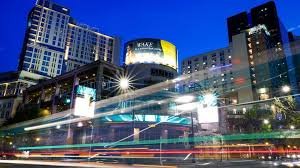
For years, the Epicentre was more than just a block in Uptown Charlotte. It was the place people actually thought of when they said “let’s go out tonight.” Locals talk about it like it was a rite of passage, a hangout hub, a one‑stop social destination. Then, over the course of a decade and a half, it went from Charlotte’s busiest nightlife and entertainment center to a mostly empty relic that had to be rebranded and rebuilt. Here’s how it all went down.
What the Epicentre Used to Be
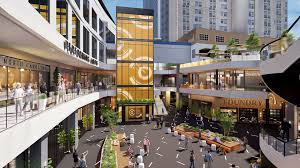
The Epicentre opened in 2008 during a boom in Uptown development. It was built on the site of the old Charlotte Convention Center and designed to be a multi‑level entertainment destination with restaurants, bars, clubs, a bowling alley, and even a movie theater where you could order food and drinks from your reclining seat.
For a lot of Charlotte people, the Epicentre was where you started a night out or ended up after dinner, concerts, or games. It hosted events tied to major city happenings like the CIAA tournament, the 2012 Democratic National Convention media hub, and even fan zones during big sports celebrations. It was the go‑to place in the heart of the city.
The layout made it feel like an urban hangout — almost like inside a city street but vertical — with businesses clustered around public spaces where people bumped into each other, met up, and hung out late into the night. That combination of convenience, choice, and social energy kept it humming for years into the 2010s.
Locals still reminisce about watching football games with big crowds at Whiskey River or hitting multiple bars in one night without ever stepping outside into the street. It wasn’t perfect, but for a long time it felt like Charlotte’s social heartbeat.
Why It Started to Decline
The decline didn’t happen overnight. There were several serious blows that chipped away at the Epicentre’s draw:
Economic timing and design issues
When the Epicentre opened in 2008, the Great Recession had just hit. That early downturn forced a bankruptcy and ownership change within a couple of years. Urban planners later pointed out that its design worked more like a suburban enclosed mall than a pedestrian city space, with blank walls facing the street and little connection to adjacent sidewalks and transit stops — things that make urban hangouts feel alive.
Shifting nightlife patterns
Through the 2010s South End and other parts of Charlotte started building their own nightlife scenes with breweries, bars, restaurants, and music venues that felt more open, walkable, and neighborhood‑centric. That made the Epicentre feel less essential.
High‑profile incidents and perception shifts
A series of violent incidents in 2019 — including a stray bullet from a fight that killed a visitor — led to intense local media coverage linking crime with the Epicentre. That negative publicity, more than anything, shook people’s confidence about going there late at night.
Business churn even before COVID
Some of the Epicentre’s restaurants and attractions started closing or being evicted before the pandemic. By late 2020, multiple businesses including bars, eateries, and the popular Studio Movie Grill had closed, and eviction notices were being carried out.
Then came the pandemic
When bars, clubs, theaters, and entertainment venues were forced to close in 2020, the Epicentre — a place built around nightlife and social gathering — got hit hard. Even after restrictions eased, foot traffic never fully returned and many tenants never reopened.
Foreclosure, Rebranding, and the End of an Era
By 2021 the Epicentre was largely vacant. Owners defaulted on an $85 million loan, and the site went into receivership and foreclosure. In late 2022 the complex was renamed Queen City Quarter as part of a rebranding and redevelopment effort aimed at mixed retail, offices, restaurants, and a more family‑friendly vibe.
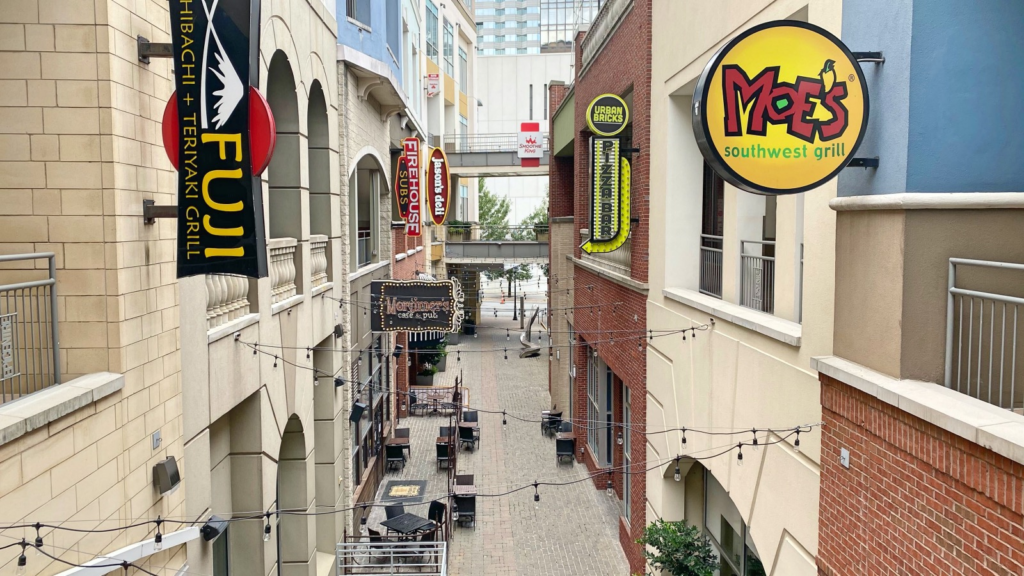
New tenants — from frozen dessert shops to casual eateries and creative spaces like Instagram‑style art museums — have been brought in to fill spaces, and renovations have touched up the courtyard, patios, lighting, and landscaping.
But even with the new name and some fresh energy, a big chunk of the old Epicentre footprint remains empty and the place doesn’t feel like the buzzing social hub it once was. Online conversations from locals often describe it as half‑empty, slow, or a shadow of what it used to be — which is exactly why many people say the city hasn’t quite been the same since.
So What Was Lost?
When people talk about how the Epicentre was the “best thing Charlotte ever had,” they’re talking about something beyond a collection of bars and restaurants. They’re talking about:
A place everyone knew
A multi‑choice social hub where you could take a date, meet friends, catch a game, have dinner, see a movie, and party — all in the same block.
A nightlife identity
For years it was Charlotte’s default “let’s go out tonight” spot. No other place in the city had that concentrated energy.
A feeling of connectedness
It was a shared experience point for college students, young professionals, visitors, and residents to meet up without needing a detailed plan.
With the shift in dining and nightlife habits, broader development in the city, and the pandemic’s disruption of social life, that era faded. The Epicentre still exists as Queen City Quarter and there are signs of life returning, but not the same central, electric pull that made it a cultural touchstone for a whole generation of Charlotte residents.
About the Author